
Watermelon
A large, juicy fruit with sweet red flesh and a hydrating, refreshing taste. It is eaten sliced, blended into drinks, and paired with salty cheese.
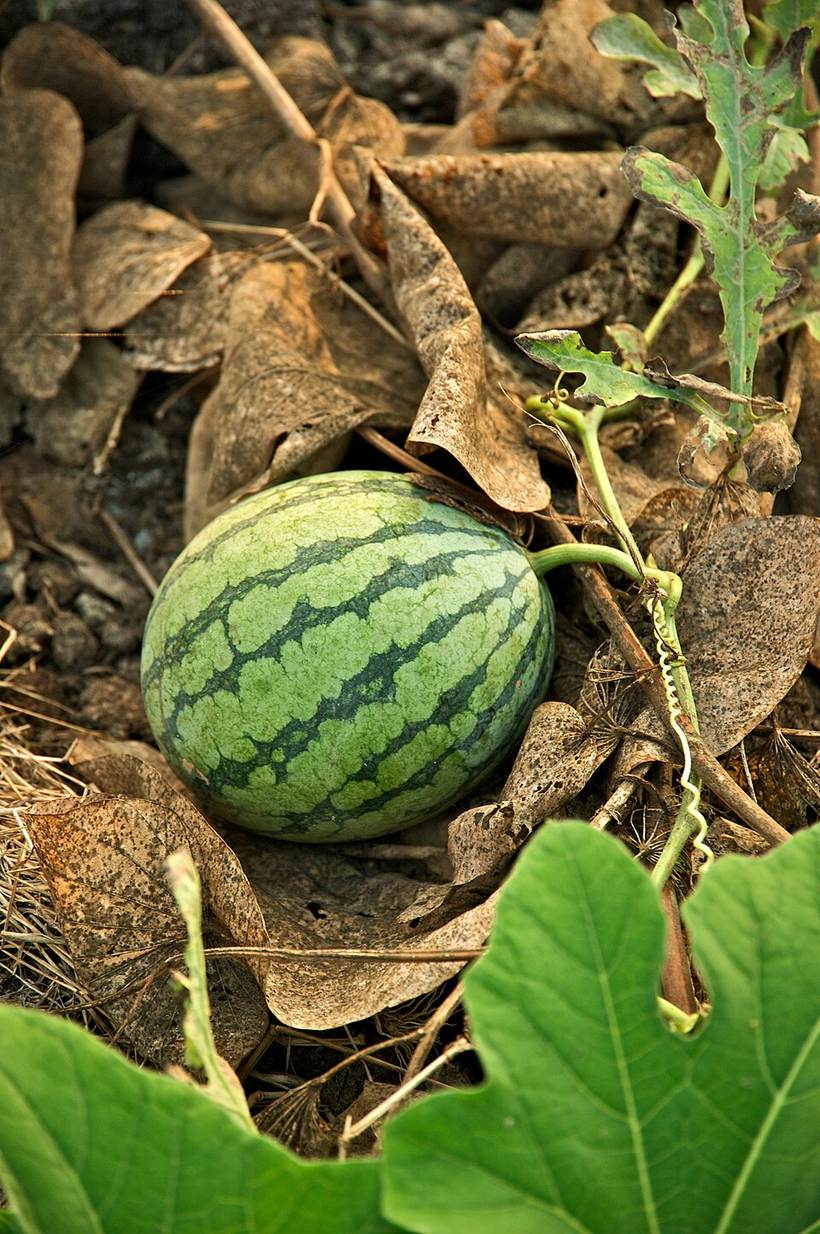
Taiwan 2009 Tainan City Organic Farm Watermelon FRD 7962: Fred Hsu (Wikipedia:User:Fred Hsu on en.wikipedia), CC BY-SA 3.0 (Wikimedia Commons)
Where it comes from
Watermelon is believed to have originated in northeastern Africa, and Sudan and Egypt have grown it for thousands of years. It is a summer staple across the Middle East, often eaten with white cheese.
Explore the cuisine of Egypt, Sudan.
Nutrition: Watermelon is about 90 percent water and provides vitamins A and C.
Enjoying Watermelon
Ways to enjoy it
- Chilled slices on their own
- With salty feta or white cheese
- Blended into juice or slushies
- Cubed in fruit and mint salads
- Grilled slices with lime
- Frozen into sorbet or pops
- Paired with fresh mint and lemon
How to choose, prepare and store
- Pick a melon that feels heavy for its size, with a yellow patch where it rested on the ground and a hollow sound when tapped.
- Wash the outside before cutting.
- Cut off both ends and stand the melon upright, then slice off the rind in strips.
- Slice into wedges, cubes or sticks.
- Chill for at least an hour before serving.
- Store cut watermelon wrapped in the refrigerator for up to 4 days.
Variations
- Seedless watermelon: Easy to eat.
- Yellow watermelon: Honey-sweet flesh.
- Sudanese gadarif melon: A hardy local type.
Cook’s tip: Chill the whole melon in advance, since cold slices taste sweeter and crisper.
Also on the menu in
- Algeria
- Botswana
- Burkina Faso
- Chad
- Iraq
- Jordan
- Libya
- Mali
- Mauritania
- Morocco
- Niger
- Nigeria
- Palestine
- Qatar
- Senegal
- Somalia
- South Sudan
- Tonga
- Tunisia
- Türkiye
Related dishes

Description and method written by Intercontinental Chef. Home-style method; quantities are a starting point, so adjust to taste.
- Taiwan 2009 Tainan City Organic Farm Watermelon FRD 7962: Fred Hsu (Wikipedia:User:Fred Hsu on en.wikipedia), CC BY-SA 3.0 (Wikimedia Commons)