
Apricot
A small golden-orange stone fruit with velvety skin and sweet-tart juicy flesh. It is eaten fresh, dried, stewed, baked into pastries and made into jam.
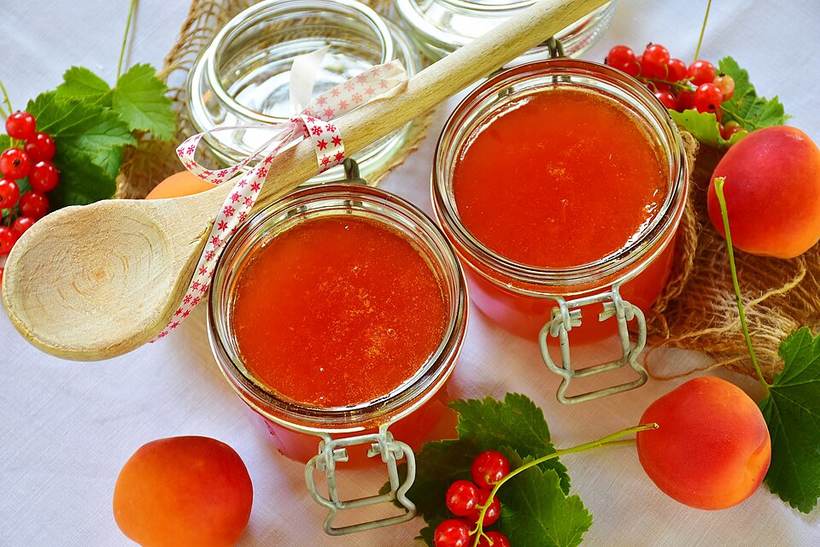
Apricot jam: Rita, CC0 (Wikimedia Commons)
Where it comes from
Apricots have been grown in Armenia and the surrounding mountains for thousands of years, and the Latin name Prunus armeniaca points to that heritage. Fresh and dried apricots are staples across Armenia, Turkiye, Iran and Central Asia.
Explore the cuisine of Armenia.
Nutrition: Apricots are a good source of vitamin A and fiber.
Fruit guide
Enjoying Apricot
Ways to enjoy it
- Eaten fresh out of hand
- Dried and added to pilaf or stews
- Cooked into jam or preserves
- Baked in tarts, cakes and pies
- Stewed with honey and nuts
- Blended into smoothies and juice
- Served with yogurt and a little honey
How to choose, prepare and store
- Choose apricots that are plump, fragrant and give slightly under gentle pressure; avoid hard or green ones.
- Ripen firm apricots in a paper bag at room temperature for a day or two.
- Rinse, split along the seam, twist apart and remove the pit.
- Eat fresh, or slice into salads and cereal.
- To dry, slice in half and set in the sun or a low oven at 175F until leathery.
- Store ripe apricots in the refrigerator for up to 5 days.
Variations
- Fresh Armenian apricot: Sweet and aromatic.
- Dried apricot: Chewy, concentrated and sweet-tart.
- Apricot kernel: Used in some pastries and sweets.
Cook’s tip: Apricots ripen quickly; refrigerate them as soon as they are soft and fragrant.
Also on the menu in
Related dishes

About this page
Description and method written by Intercontinental Chef. Home-style method; quantities are a starting point, so adjust to taste.
Photo credit
- Apricot jam: Rita, CC0 (Wikimedia Commons)