
Halva
Halva is a dense, sweet confection that can be made from ground sesame paste or from cooked semolina or flour. It is fudge-like, nutty and delicately flavored with vanilla, pistachio or cocoa.
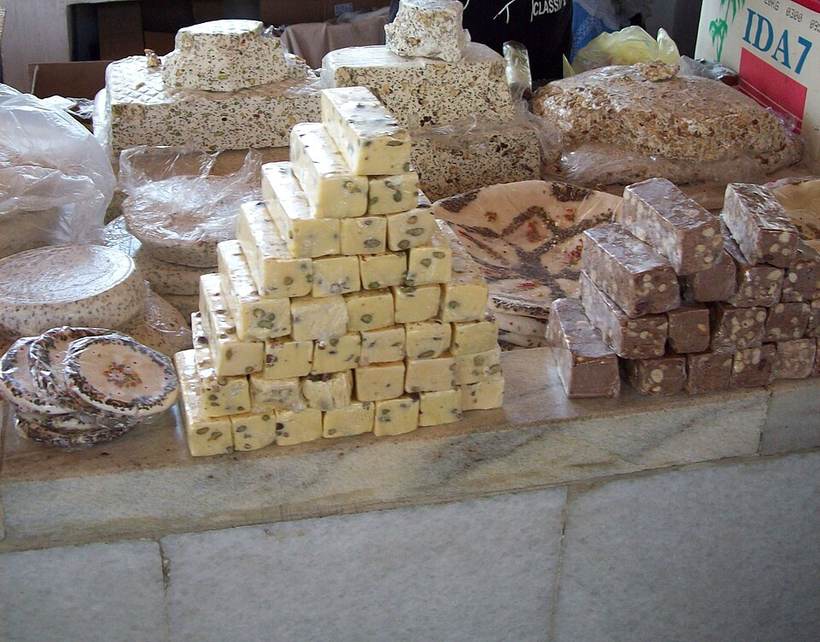
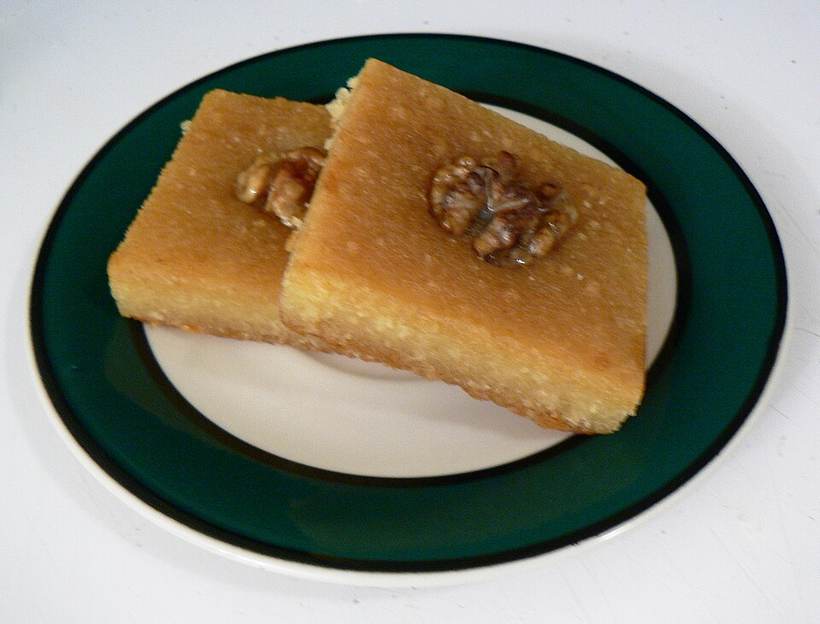
Orient sweets (special halva) Samarkand, Siyab: Shuhrenataxmedov, CC BY-SA 3.0 (Wikimedia Commons)
_Samarkand,_Siyab.jpg)
Where it comes from
Halva is enjoyed from the Middle East and Turkiye to Iran, the Balkans and South Asia, and the word is used for many different sweets. The sesame-based tahini halva is especially popular in the Mediterranean, while semolina halva is a warm homemade dessert.
Explore the cuisine of Türkiye, Iran.
Make Halva at home
Ingredients
- 1 cup semolina
- 1/2 cup butter
- 1/2 cup pine nuts or chopped almonds
- 1 cup sugar
- 2 cups water
- 1 cup milk
- 1/2 tsp cinnamon
- 1 tsp vanilla
- Pinch of salt
- Ice cream or yogurt to serve (optional)
How it's made
- Bring the water, sugar and milk to a simmer until the sugar dissolves, then keep warm.
- Melt the butter in a heavy pan and toast the pine nuts until golden.
- Add the semolina and stir over medium heat for 10 to 12 minutes until it turns light brown and smells nutty.
- Carefully pour in the hot syrup mixture, stirring quickly as it will sputter.
- Cook, stirring, for 5 minutes until it thickens and pulls away from the pan.
- Cover and rest for 10 minutes, then fluff with a fork.
- Serve warm, dusted with cinnamon.
Variations
- Tahini halva: A no-cook block of ground sesame and sugar syrup, often with pistachios.
- Flour halva: Made by toasting flour in butter with sugar syrup.
- Cocoa halva: Marbled with chocolate.
Cook’s tip: Toast the semolina until it smells nutty and turns golden; this gives halva its characteristic flavor.
Also on the menu in
Related dishes
Description and method written by Intercontinental Chef. Home-style method; quantities are a starting point, so adjust to taste.
- Orient sweets (special halva) Samarkand, Siyab: Shuhrenataxmedov, CC BY-SA 3.0 (Wikimedia Commons)