
Arabic coffee (qahwa)
A lightly roasted, golden coffee brewed with cardamom, and often saffron or cloves, and served in small handle-less cups. It is pale, aromatic and not sweet, and traditionally paired with dates.
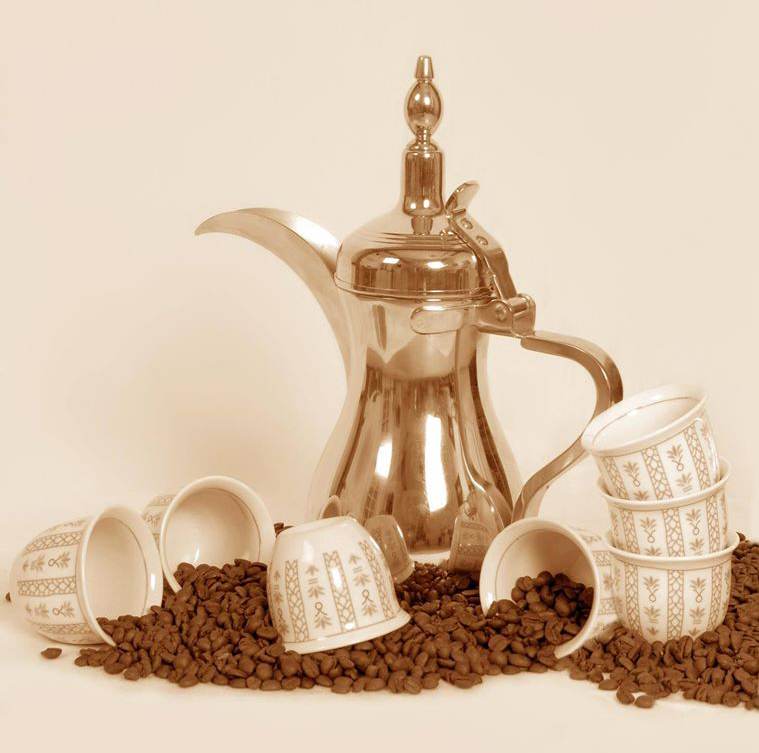
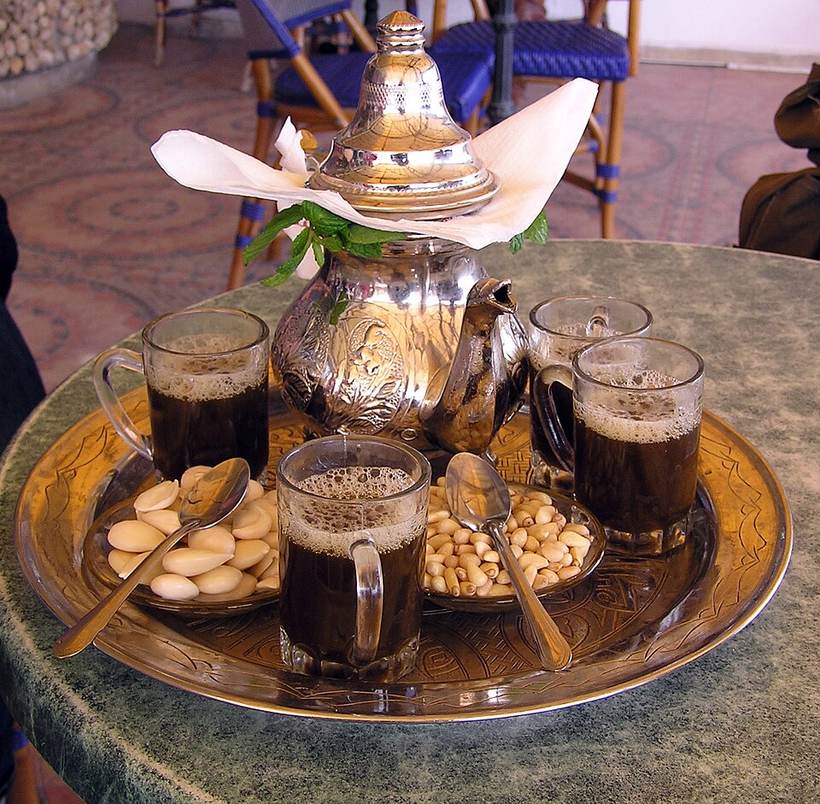
A dallah a traditional Arabic coffee pot with cups and coffee beans: Canbel, CC BY-SA 4.0 (Wikimedia Commons)

Where it comes from
Arabic coffee is a symbol of welcome in Saudi Arabia, the United Arab Emirates and across the Gulf. It is poured from a long-spouted pot called a dallah, and guests are offered a small amount at a time as a sign of hospitality.
Explore the cuisine of Saudi Arabia, United Arab Emirates.
Make Arabic coffee (qahwa) at home
Ingredients
- 3 tbsp lightly roasted coffee beans, freshly ground
- 3 cups water
- 1 tsp ground cardamom
- A pinch of saffron threads
- 2 whole cloves (optional)
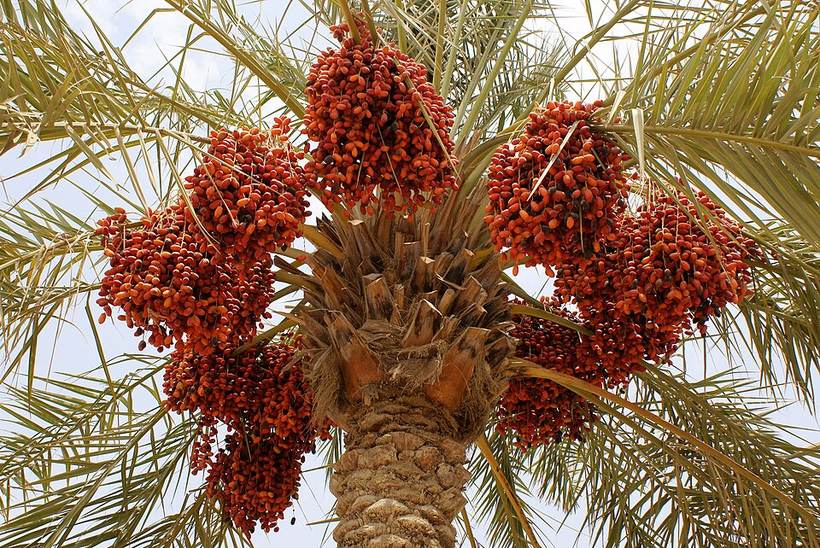
- Dates to serve
- Small cups without handles
How it's made
- Bring the water to a boil in a small pot or dallah.
- Add the ground coffee and let it simmer gently for 10 to 15 minutes without stirring too much.
- Skim off any foam and let it settle for a minute.
- Place the ground cardamom, saffron and cloves in a second pot or thermos.
- Pour the brewed coffee through a fine strainer over the spices.
- Let it steep 5 minutes.
- Pour about a third of a cup per guest, and offer a second cup.
- Serve with dates.
Variations
- Saudi qahwa: Very light, with generous cardamom and saffron.
- Emirati gahwa: Often finished with a touch of saffron and rose water.
- Dark qahwa: A darker roast common in the north of the peninsula.
Cook’s tip: Keep the roast light and pour the coffee at a low angle so the grounds stay in the pot.
Also on the menu in
Related dishes
Description and method written by Intercontinental Chef. Home-style method; quantities are a starting point, so adjust to taste.
- A dallah a traditional Arabic coffee pot with cups and coffee beans: Canbel, CC BY-SA 4.0 (Wikimedia Commons)