
Manti
Tiny dumplings filled with seasoned minced meat, baked or boiled and served with garlicky yogurt and a drizzle of spiced melted butter. They are bite-size, tender and aromatic.
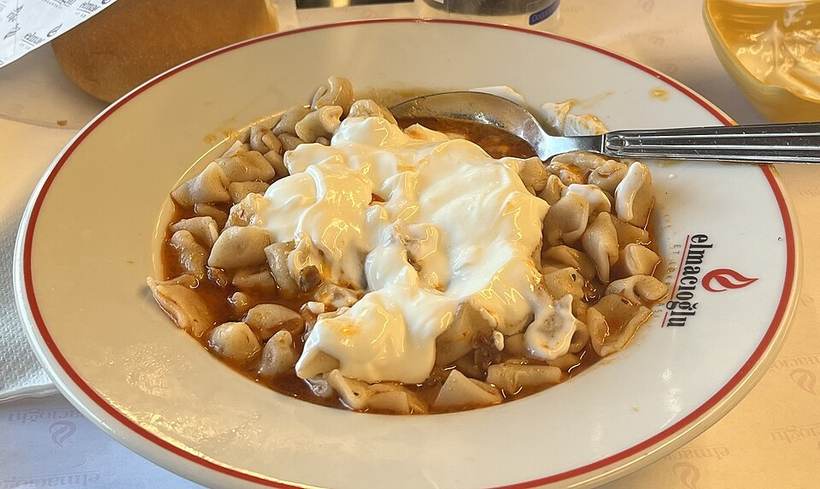
Kayseride bir restoranda Kayseri mantısı (cropped): Kızılkum, CC BY-SA 4.0 (Wikimedia Commons)
.jpg)
Where it comes from
Manti is enjoyed across Turkiye, Uzbekistan and Kazakhstan, and across Central Asia and the Caucasus. In Turkiye the best-known version comes from Kayseri, where the dumplings are tiny enough that a spoon holds many.
Explore the cuisine of Türkiye, Uzbekistan, Kazakhstan.
Make Manti at home
Ingredients
- 2 cups all-purpose flour
- 1 egg
- 1/2 cup water
- 1/2 tsp salt
- 1/2 lb ground beef or lamb
- 1 small onion, grated
- 1/2 tsp black pepper and 1/2 tsp salt
- 1 1/2 cups plain yogurt
- 2 cloves garlic, crushed
- 3 tbsp butter
- 1 tsp paprika or Aleppo pepper
- Dried mint and sumac to garnish
How it's made
- Mix flour, egg, water and salt into a firm dough; knead and rest 30 minutes.
- Combine the meat, onion, salt and pepper for the filling.
- Roll the dough very thin and cut into 1 1/2-inch squares.
- Place a small dab of filling in the center of each square and pinch the corners together.
- Bake on an oiled tray at 400F for 15 minutes until lightly golden, then pour hot broth over them and bake 5 more minutes, or boil in salted water for 8 minutes.
- Mix the yogurt with the garlic.
- Spoon the manti into bowls and add the yogurt.
- Melt the butter with the paprika until sizzling and drizzle over, finishing with mint and sumac.
Variations
- Kayseri manti: Tiny and served with yogurt and tomato sauce.
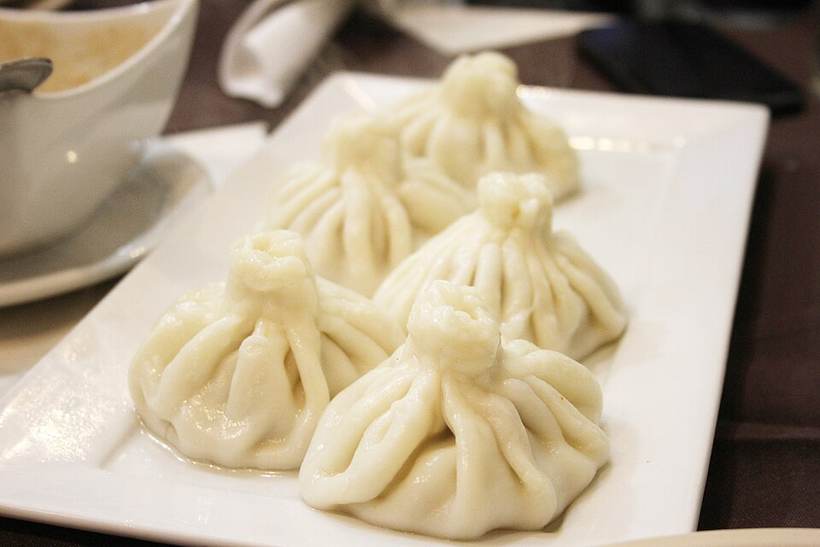
- Uzbek manti: Larger, steamed dumplings with onion and lamb.
- Pumpkin manti: A vegetarian filling.
Cook’s tip: Roll the dough as thin as you can; thin wrappers cook through quickly and stay delicate.
Also on the menu in
Related dishes
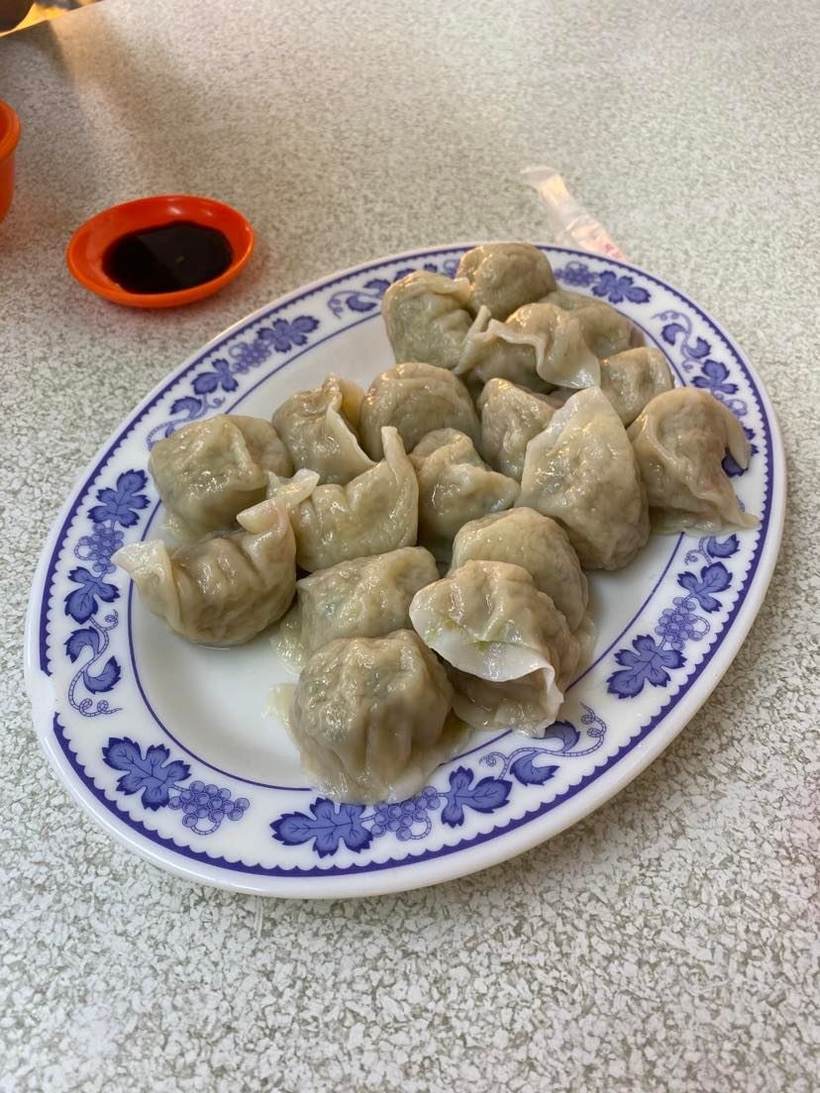
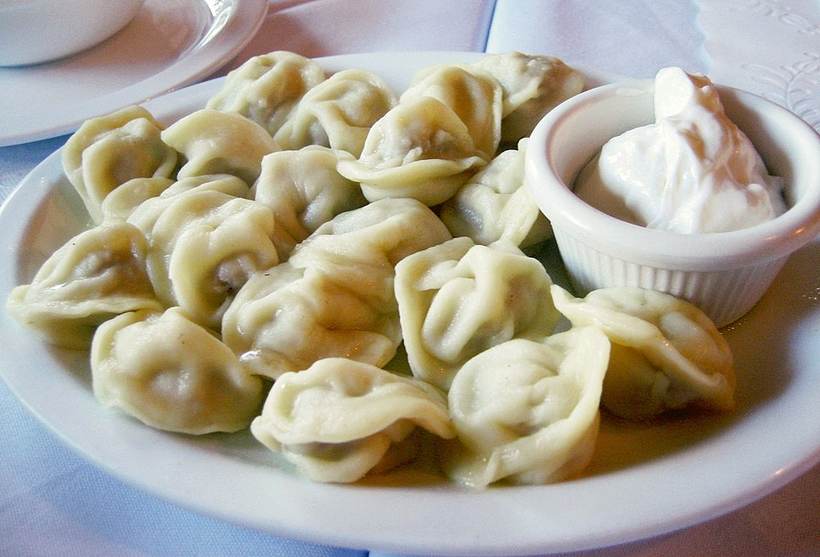
Description and method written by Intercontinental Chef. Home-style method; quantities are a starting point, so adjust to taste.
- Kayseride bir restoranda Kayseri mantısı (cropped): Kızılkum, CC BY-SA 4.0 (Wikimedia Commons)