
Harees
A comforting porridge made by simmering cracked wheat and meat for hours until the two blend into a smooth, creamy texture. It is finished with a pool of melted ghee and a pinch of cinnamon.
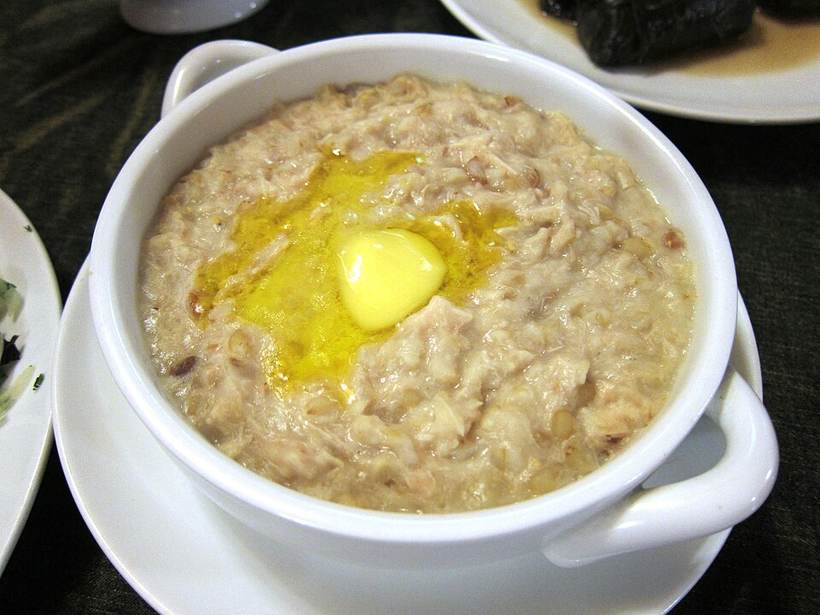
Armenian Harisa: Ketone16, CC BY-SA 4.0 (Wikimedia Commons)

Where it comes from
Harees is a very old dish enjoyed throughout the Arabian Peninsula, in Saudi Arabia, the United Arab Emirates and Oman among others. It is traditionally made for weddings and big family gatherings because the long, slow cooking suits large pots and shared tables.
Explore the cuisine of Saudi Arabia, United Arab Emirates, Oman.
Make Harees at home
Ingredients
- 2 cups whole or coarse cracked wheat, soaked overnight
- 1 lb boneless lamb or chicken thighs
- 8 cups water or stock
- 1 onion, halved
- 1 cinnamon stick
- 4 cardamom pods
- 1 tsp salt, or to taste
- 3 tbsp ghee, melted
- 1/2 tsp ground cinnamon
- Pinch of black pepper
How it's made
- Drain the soaked wheat and put it in a heavy pot with the meat, onion, cinnamon stick, cardamom and water.
- Bring to a boil, skim off the foam, then reduce heat to low and cover.
- Simmer for 2 to 3 hours, stirring from time to time and adding hot water if it gets too thick.
- Remove the onion and spice pieces once the meat is falling apart.
- Beat vigorously with a wooden spoon or masher until the mixture becomes smooth and stretchy like porridge.
- Season with salt and pepper and cook 10 more minutes.
- Spoon into bowls, make a well in the center, pour in hot ghee and dust with cinnamon.
Variations
- Chicken harees: A lighter version using bone-in chicken.
- Sweet-spiced harees: Finished with a little sugar and cinnamon, Gulf style.
- Caucasus harissa: A similar wheat and chicken porridge enjoyed in the Caucasus.
Cook’s tip: Beat the porridge while it is still hot; the wheat releases its starch and the texture becomes silky.
Also on the menu in
Related dishes
Description and method written by Intercontinental Chef. Home-style method; quantities are a starting point, so adjust to taste.
- Armenian Harisa: Ketone16, CC BY-SA 4.0 (Wikimedia Commons)