
Risotto
Creamy short-grain rice cooked slowly by adding hot stock a ladle at a time, until each grain is tender with a slight bite. Finished with butter and Parmesan it is rich and silky.
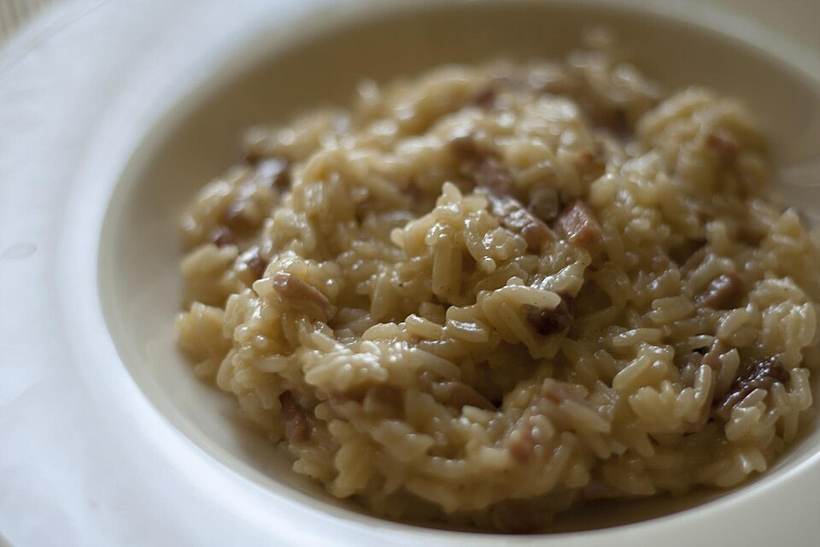
Risotto with speck and goat cheese (6101067436): Luca Nebuloni from Milan, Italy, CC BY 2.0 (Wikimedia Commons)
.jpg)
Where it comes from
Risotto is a specialty of northern Italy, particularly Lombardy and the Po Valley, where short-grain rice is grown. Milanese risotto, colored golden with saffron, is among its most famous versions.
Explore the cuisine of Italy.
Make Risotto at home
Ingredients
- 5 cups (1.2 L) chicken or vegetable stock, kept hot
- 3 tbsp butter
- 1 small onion, finely chopped
- 1 1/2 cups (300 g) Arborio or Carnaroli rice
- 1/4 cup (60 ml) white grape juice with a squeeze of lemon
- Pinch of saffron threads (optional)
- 1/2 cup (50 g) grated Parmesan
- Salt and pepper
How it's made
- Keep the stock at a gentle simmer in a pot beside the stove.
- Melt 2 tablespoons butter in a wide pan and soften the onion for 5 minutes.
- Add the rice and stir for 2 minutes until the grains are glossy and lightly toasted.
- Pour in the grape juice and lemon and stir until absorbed.
- Add stock a ladle at a time, stirring often, waiting until each is nearly absorbed before adding more. Stir in saffron midway.
- After about 18 minutes the rice should be creamy yet al dente.
- Off the heat, stir in remaining butter and Parmesan, then rest 2 minutes before serving.
Variations
- Mushroom risotto with porcini.
- Pea and lemon risotto.
- Pumpkin risotto.
Cook’s tip: Keep the stock hot and the stirring steady, and stop cooking while it is still a touch loose; it thickens as it rests.
Related dishes

Description and method written by Intercontinental Chef. Home-style method; quantities are a starting point, so adjust to taste.
- Risotto with speck and goat cheese (6101067436): Luca Nebuloni from Milan, Italy, CC BY 2.0 (Wikimedia Commons)