
Lahmacun
A paper-thin round of dough covered with a spiced mix of minced meat, tomatoes, peppers and herbs, baked until crisp at the edges. It is rolled up with parsley, onion and lemon.
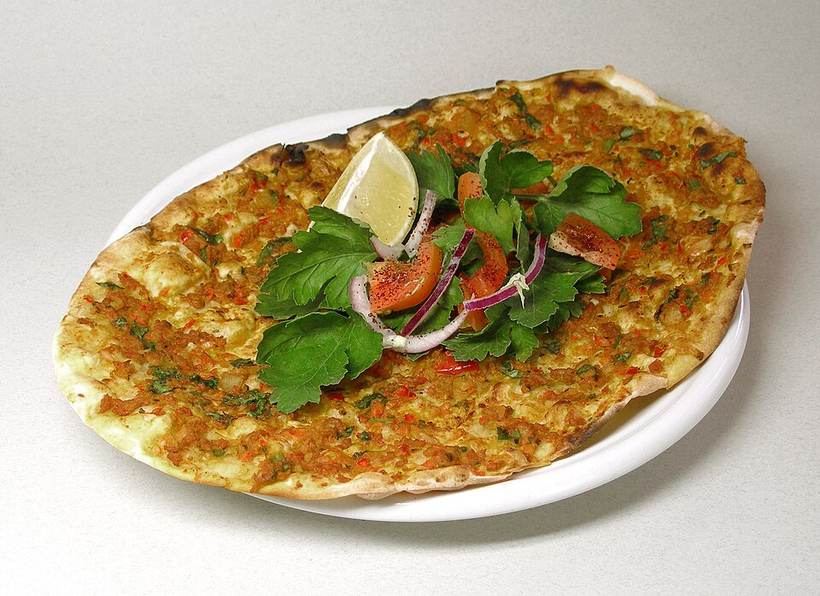
Lahmacun: No machine-readable author provided. Rainer Zenz assumed (based on copyright claims)., CC BY-SA 3.0 (Wikimedia Commons)

Where it comes from
Lahmacun is a popular street food of Turkiye, especially in the southeast, and also enjoyed in the Levant and Armenia. Its name comes from Arabic words meaning dough with meat, and it is baked in wood-fired ovens.
Explore the cuisine of Türkiye.
Make Lahmacun at home
Ingredients
- 2 1/2 cups all-purpose flour
- 1 tsp instant yeast
- 1 tsp salt
- 3/4 cup warm water
- 2 tbsp olive oil
- 1/2 lb ground lamb or beef
- 1 small onion and 1 red pepper, finely chopped
- 2 tomatoes, grated
- 2 cloves garlic
- 1 tbsp tomato paste and 1 tsp paprika
- Handful of parsley
- Lemon wedges and sliced onion to serve
How it's made
- Mix flour, yeast, salt, water and oil into a dough and knead for 8 minutes; rest 1 hour.
- Combine the meat, onion, pepper, tomatoes, garlic, tomato paste, paprika and parsley.
- Heat the oven to 500F with a baking sheet inside.
- Divide the dough into 6 balls and roll each into a very thin disc.
- Spread a thin layer of topping over each disc.
- Bake for 5 to 7 minutes until the edges are crisp.
- Top with parsley and onion, squeeze lemon over and roll up.
Variations
- Vegetarian lahmacun: Topped with peppers and tomatoes only.
- Cheese lahmacun: With a little melted cheese.
- Mini lahmacun: Bite-size pieces for sharing.
Cook’s tip: Spread the topping very thin and bake hot; this gives the base its characteristic crisp, cracker-like feel.
Related dishes

Description and method written by Intercontinental Chef. Home-style method; quantities are a starting point, so adjust to taste.
- Lahmacun: No machine-readable author provided. Rainer Zenz assumed (based on copyright claims)., CC BY-SA 3.0 (Wikimedia Commons)