
Egg tart
Egg tarts are small pastry shells filled with a smooth, lightly sweet egg custard and baked until just set. The shell may be flaky or shortcrust.
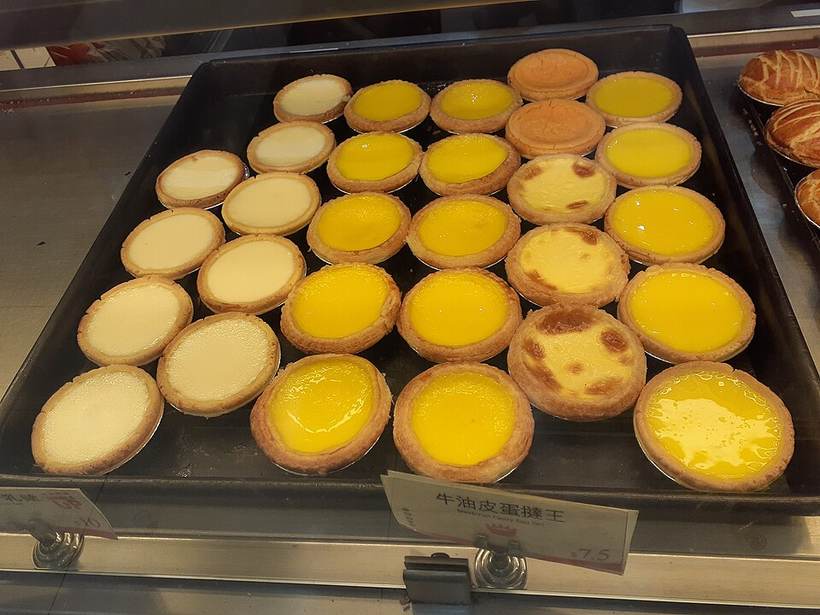
HK SSP 長沙灣 Cheung Sha Wan 深盛路 Sham Shing Road 泓景滙商場 Banyan Mall shop 蛋撻王 King Bakery Studio December 2019 SS2 egg tarts: LNAM Haoi, CC BY-SA 4.0 (Wikimedia Commons)

Where it comes from
Egg tarts are a beloved bakery and tea-house treat in Hong Kong and Macao, where they are made in both Cantonese and Portuguese-influenced styles. They are best eaten warm.
Explore the cuisine of Hong Kong, Macao.
Recipe
Make Egg tart at home
Ingredients
- 1 3/4 cups all-purpose flour
- 1/2 cup cold butter, cubed
- 1 egg yolk
- 3 tablespoons cold water
- 3 whole eggs
- 1/2 cup sugar
- 1 cup hot water
- 1/2 cup evaporated milk
- 1 teaspoon vanilla
How it's made
- Rub the butter into the flour, then mix in the egg yolk and water to form a dough. Chill 30 minutes.
- Press the dough into a 12-cup muffin tin or tart molds, rolling it out and cutting rounds if you like.
- Dissolve the sugar in the hot water and cool to lukewarm.
- Whisk in the eggs, evaporated milk and vanilla and strain for smoothness.
- Fill the shells almost to the top.
- Bake at 400 F (200 C) for 10 minutes, then reduce to 350 F (175 C) for 15 minutes until the custard is just set.
Variations
- Cantonese-style with a shortcrust shell
- Portuguese-style with a flaky laminated shell and caramelized top
- Milk tea or matcha custard
Cook’s tip: Strain the custard and fill carefully to avoid bubbles for a glass-smooth top.
Also on the menu in
Related dishes
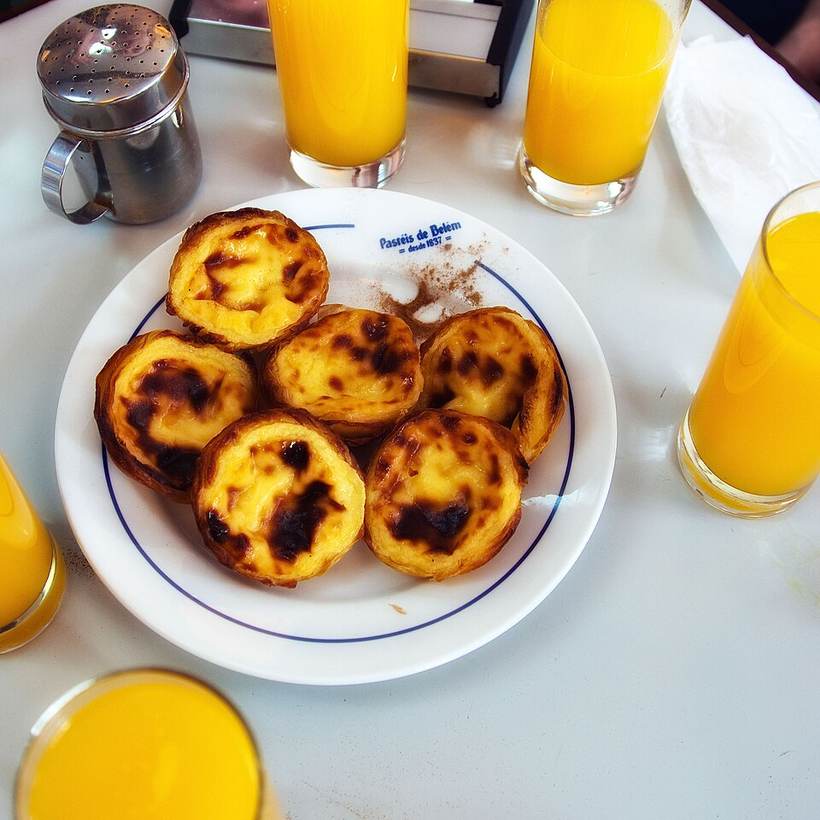
Pastel de nataDesserts and sweets · Portugal
Dim sumBreakfast · China
Creme bruleeDesserts and sweets · France
MooncakeDesserts and sweets · China
FlanDesserts and sweets · Spain
About this page
Description and method written by Intercontinental Chef. Home-style method; quantities are a starting point, so adjust to taste.
Photo credit
- HK SSP 長沙灣 Cheung Sha Wan 深盛路 Sham Shing Road 泓景滙商場 Banyan Mall shop 蛋撻王 King Bakery Studio December 2019 SS2 egg tarts: LNAM Haoi, CC BY-SA 4.0 (Wikimedia Commons)