
Vietnamese Pho
Hanoi's aromatic beef noodle soup. Pho is Vietnam's clear beef broth with rice noodles, charred aromatics and fresh herbs. Its northern roots, north versus south styles, and a recipe.
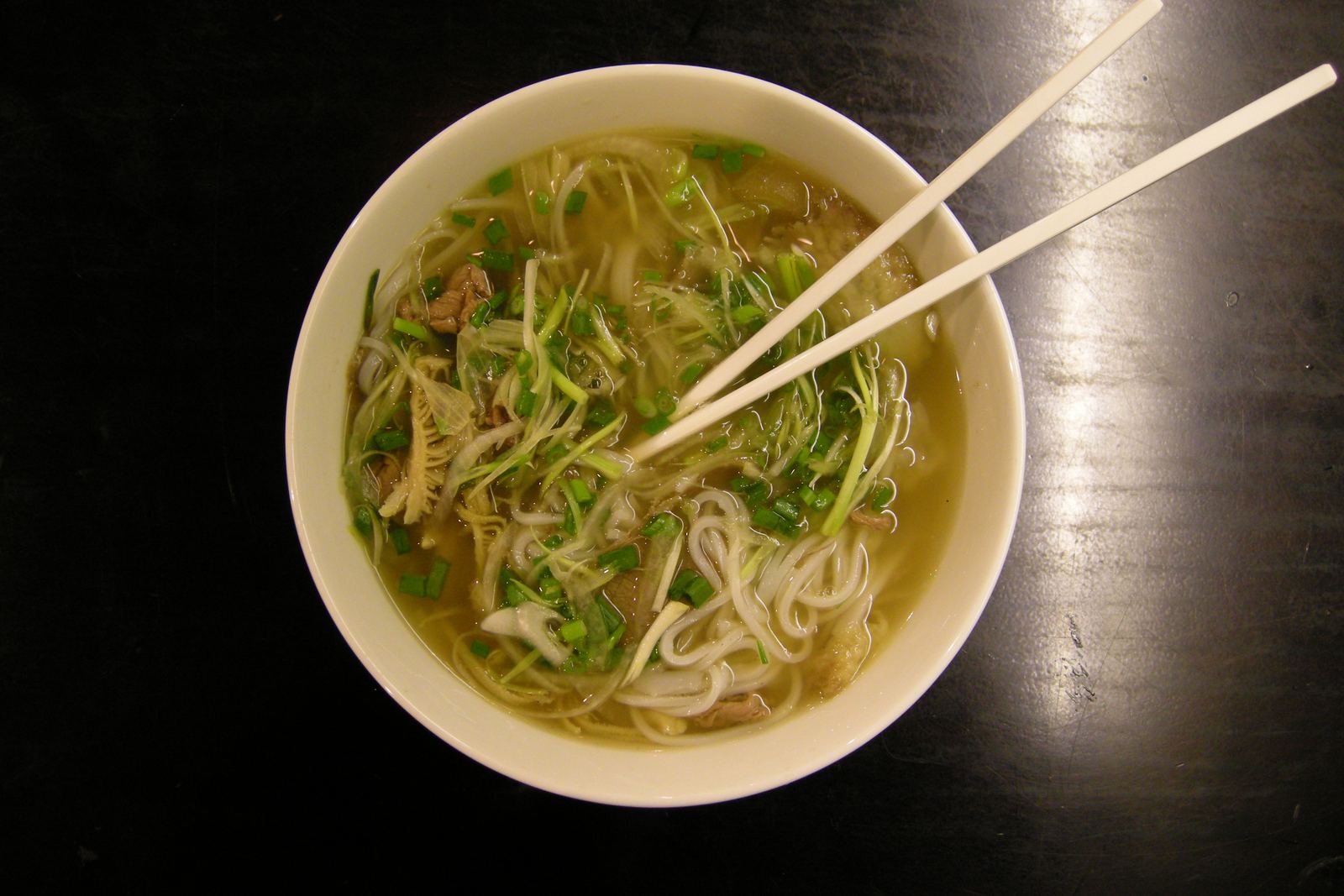
Pho in Ho Chi Minh City: Vyacheslav Argenberg, CC BY 4.0
Born in the north
Pho appeared in northern Vietnam around the turn of the twentieth century, around Hanoi and the textile province of Nam Dinh. Its exact birth is debated, and historians point to a mix of influences: Vietnamese rice noodle soups, Chinese cooks and spices, and the French colonial taste for beef, which made bones and cheaper cuts available. Street vendors carried pots of it on shoulder poles, selling bowls at dawn.
Video: Vietnamese Pho recipe (RecipeTin Eats), embedded from YouTube.
The broth is everything
A good pho broth is clear, deep and fragrant. Beef bones simmer for hours with onion and ginger that have been charred over a flame, which gives a smoky sweetness. Toasted star anise, cinnamon, cloves, black cardamom and coriander seed go in a spice bag, and fish sauce and a little rock sugar season the pot.
Each bowl is built to order: soft flat rice noodles, thin slices of raw beef that cook in the hot broth, or brisket and tendon for something richer, then a ladle of boiling broth.
North versus south
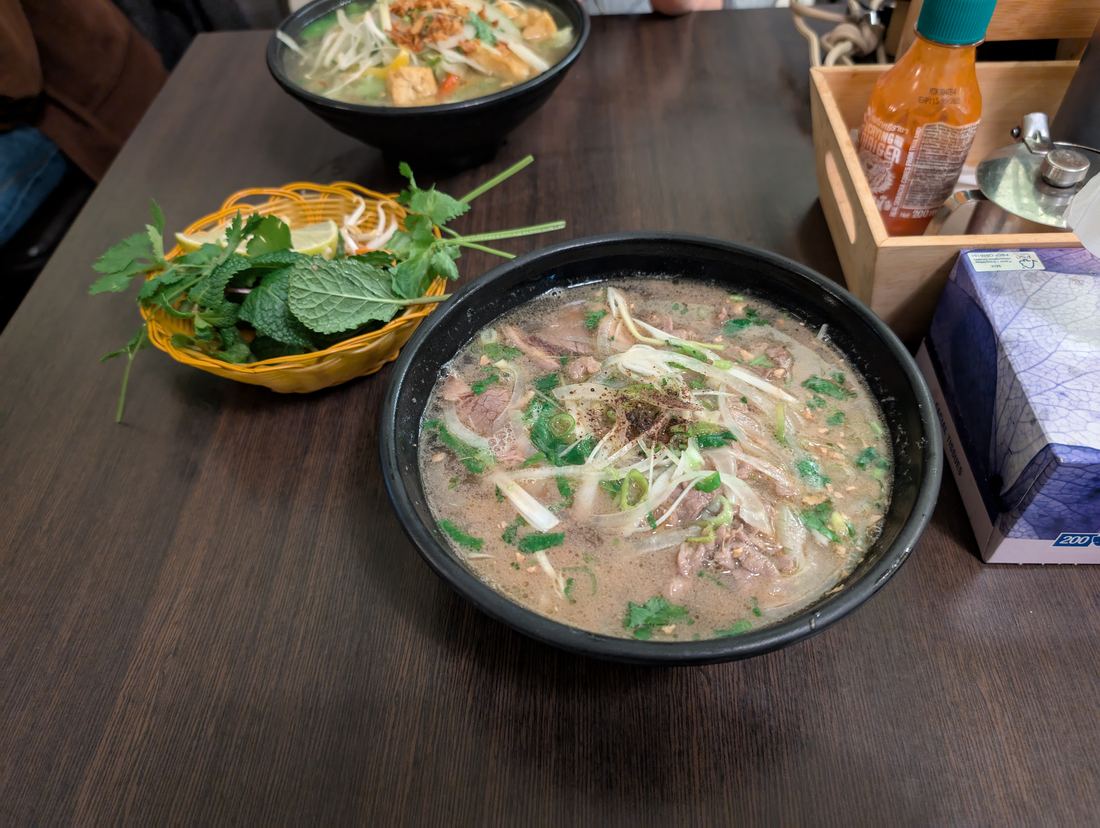
After the country was divided in 1954, many northerners moved south and took pho with them. Saigon pho evolved into a sweeter, more generous bowl served with a plate of bean sprouts, Thai basil, sawtooth herb, lime and chili, plus hoisin and chili sauce on the table. Hanoi purists prefer a cleaner broth topped simply with green onion and cilantro, and some frown on sauces in the bowl.
Vietnamese refugees carried pho around the world after 1975, which is why it is now a staple in cities from Paris to Houston.
How to enjoy it
Taste the broth first, before adding anything. Then tear in herbs, squeeze in lime and add chili to your liking. Chopsticks in one hand, spoon in the other: lift noodles and broth together.
Pho shops in Vietnam often serve one thing only, and the best open early and close when the broth runs out. Toppings vary: tai is rare beef, chin is well-done brisket, gan is tendon, and bo vien are springy beef meatballs. Pho ga, made with a lighter chicken broth, is just as loved. Many diners order a side of quay, crisp fried dough sticks, to dip into the soup. A bowl at a street stall is cheap, quick and eaten at a low plastic stool on the pavement.
Make Vietnamese Pho at home
Ingredients
- 4 lb (1.8 kg) beef bones, a mix of marrow and knuckle
- 1 lb (450 g) beef brisket in one piece
- 2 onions, halved, and a 4 inch (10 cm) piece of ginger, halved lengthwise
- 5 star anise, 1 cinnamon stick, 5 cloves, 1 black cardamom pod, 1 tbsp coriander seeds
- 3 tbsp fish sauce (45 ml), plus more to taste
- 1 tbsp rock sugar or regular sugar
- 1 lb (450 g) dried flat rice noodles
- 8 oz (225 g) beef sirloin, very thinly sliced (partly freeze it first)
- To serve: sliced green onion, cilantro, Thai basil, bean sprouts, lime wedges, sliced chili
Method
- Cover the bones with cold water, bring to a boil and boil 5 minutes. Drain and rinse the bones and the pot. This keeps the broth clear.
- Char the onions and ginger cut side down in a dry pan or under the broiler until blackened in spots.
- Return the bones to the pot with 5 quarts (4.7 liters) of water, the brisket, onions and ginger. Simmer very gently, skimming often.
- Toast the spices in a dry pan for 2 minutes, tie in cheesecloth and add to the pot.
- After 1 1/2 hours, remove the brisket, cool and slice. Keep the broth barely simmering 2 more hours, then strain. Season with fish sauce and sugar.
- Soak the noodles in warm water 30 minutes, then cook in boiling water about 1 minute and divide among bowls.
- Top with brisket and raw sirloin slices, then ladle on boiling broth to cook the beef. Add green onion and cilantro and serve with the herb plate.
- Vietnam Tourism: The story of Vietnamese pho
- Viet World Kitchen: History of Pho Noodle Soup
- Wikipedia: Pho
Facts on this page were checked against these sources.
Text written by Intercontinental Chef.

_-_Pho_Hanoi_Authentic_2024-12-01.jpg)