Chicken Biryani
Layered rice, spice and slow steam. Chicken biryani layers spiced chicken and fragrant basmati, sealed to steam. Its Mughal history, regional styles and a home dum biryani recipe.
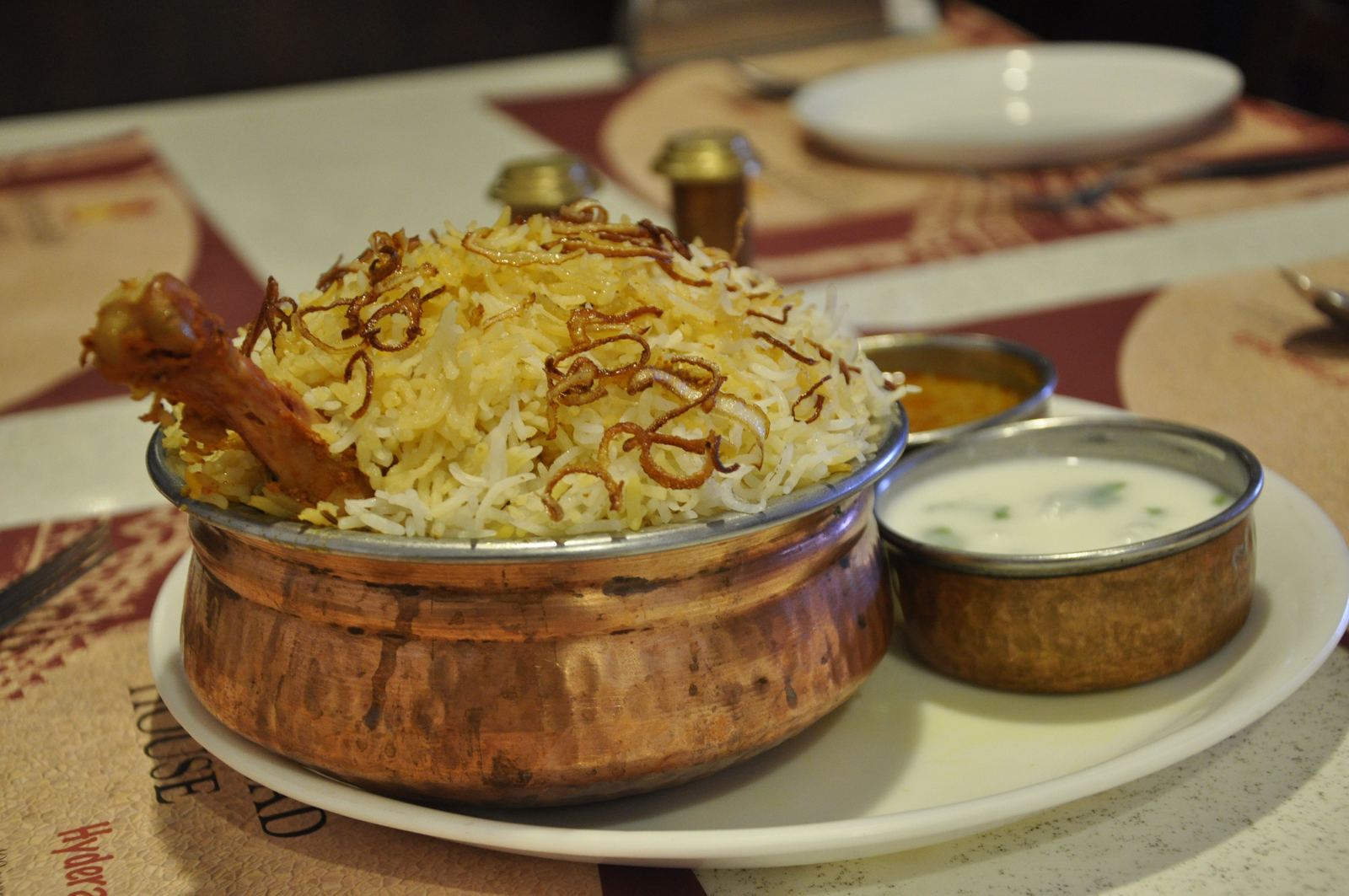
Hyderabadi chicken biryani: Dheerajk88, CC BY-SA 4.0
A royal rice dish
Biryani is most often linked to the kitchens of the Mughal Empire, which ruled much of the Indian subcontinent from 1526, though some historians argue that rice and meat dishes like it existed in India, especially the south, before the Mughals. Its name is usually traced to Persian, either birinj, rice, or biryan, fried or roasted. Persian pilaf traditions met Indian spices, and cooks at royal courts refined the idea of cooking meat and rice in layers until both were perfectly done at the same moment.
Video: How One of NYC’s Best Indian Chefs Makes Biryani | Epicurious 101 (Epicurious), embedded from YouTube.
What dum means
The heart of biryani is dum, a style of slow cooking in a sealed pot. Partly cooked rice is layered over marinated meat, the lid is sealed with dough or foil, and the pot cooks on gentle heat so the steam trapped inside finishes everything. When the seal breaks at the table, the smell of saffron, mint, fried onions and whole spices fills the room.
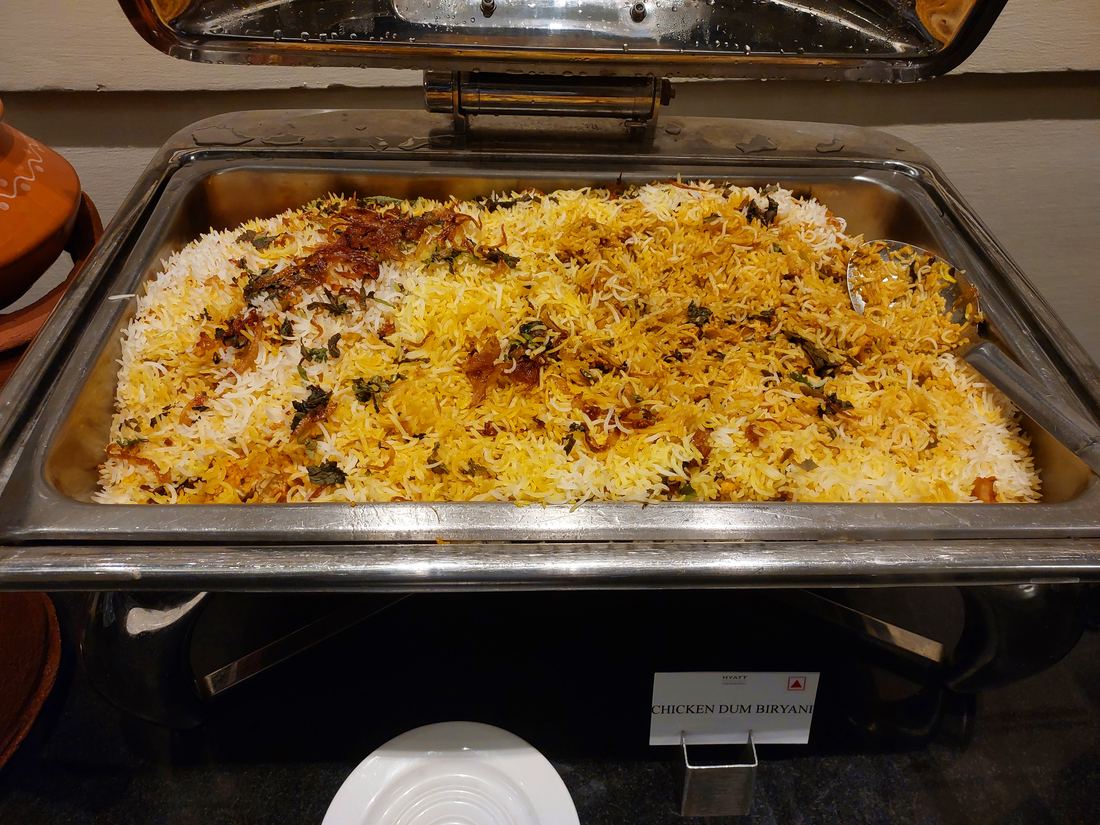
Good biryani has separate grains, each one tender but intact, with the bottom layer moist and richly flavored by the meat juices and the top flecked with saffron gold and white.
The rice is usually long-grain basmati, rinsed and soaked so the grains stretch long as they cook. Fried onions, called birista, add sweetness and color. Whole spices such as cardamom, cloves, cinnamon and bay leaf flavor the water used to parboil the rice, and saffron soaked in warm milk is drizzled over the top layer for its golden streaks and floral scent. Rose water or kewra water, a floral essence, sometimes adds a final perfume.
A city for every style
Hyderabadi biryani is famous for kacchi style, where raw marinated meat goes under the rice and cooks entirely in the pot. Lucknow, in the old Awadh region, prefers a gentler pakki style with meat cooked first in a delicate stock. Kolkata biryani is known for its potatoes and boiled eggs. On the Malabar coast of Kerala, cooks use a small fragrant rice called kaima, and Sindhi biryani from Pakistan adds plums and a bolder chili kick.
Serving biryani
Biryani is a feast dish for weddings, Eid and family gatherings, often cooked in huge pots. Serve it with cool yogurt raita, a sliced onion and lemon salad, and in Hyderabad, mirchi ka salan, a tangy chili and peanut curry. Scoop deep with each serving so everyone gets both rice and meat.
Make Chicken Biryani at home
Ingredients
- 2 lb (900 g) bone-in chicken pieces
- 1 cup plain yogurt (245 g)
- 1 tbsp ginger-garlic paste
- 1 1/2 tsp Kashmiri chili powder
- 1/2 tsp turmeric
- 2 tsp garam masala
- Juice of 1 lemon
- 2 cups basmati rice (400 g), rinsed and soaked 30 minutes
- Whole spices: 4 green cardamom pods, 4 cloves, 1 bay leaf, 1 small cinnamon stick
- 3 large onions, thinly sliced
- 1/2 cup neutral oil (120 ml) for frying, plus 2 tbsp ghee
- 1 handful each mint and cilantro leaves
- 1 pinch saffron soaked in 3 tbsp warm milk
- Salt
Method
- Mix the chicken with the yogurt, ginger-garlic paste, chili powder, turmeric, garam masala, lemon juice and 1 1/2 tsp salt. Marinate at least 2 hours, or overnight in the fridge.
- Fry the onions in the oil over medium heat, stirring, for 15 to 20 minutes until deep golden. Lift out and drain. Keep 2 tbsp of the onion oil.
- Boil a large pot of well-salted water with the whole spices. Add the drained rice and cook 5 to 6 minutes until about 70 percent done, firm in the center. Drain.
- In a heavy pot, add the onion oil and the chicken with its marinade. Top with half the fried onions and half the herbs.
- Spread the rice evenly over the chicken. Scatter on the remaining onions and herbs, drizzle with the saffron milk and dot with ghee.
- Seal the pot tightly with foil and the lid. Cook on medium heat for 10 minutes, then on the lowest heat for 35 to 40 minutes. A heat diffuser helps prevent scorching.
- Check that the chicken is cooked through, with no pink at the bone (165 F / 74 C); if not, reseal and cook 10 minutes more. Rest 10 minutes off the heat, then open and serve, scooping from the bottom so every plate gets chicken and rice.
- IBTimes India: Biryani originated in India, not Middle East
- Times Life: Biryani Is Not Mughal
- Swastik Spices: The Story of Biryani
Facts on this page were checked against these sources.
- Hyderabadi chicken biryani: Dheerajk88, CC BY-SA 4.0
- Chicken dum biryani tray: Vis M, CC BY-SA 4.0
Text written by Intercontinental Chef.