Pavlova
The meringue two nations claim. Pavlova is a crisp, marshmallowy meringue named after ballerina Anna Pavlova. Australia and New Zealand both claim it. The story and a recipe.
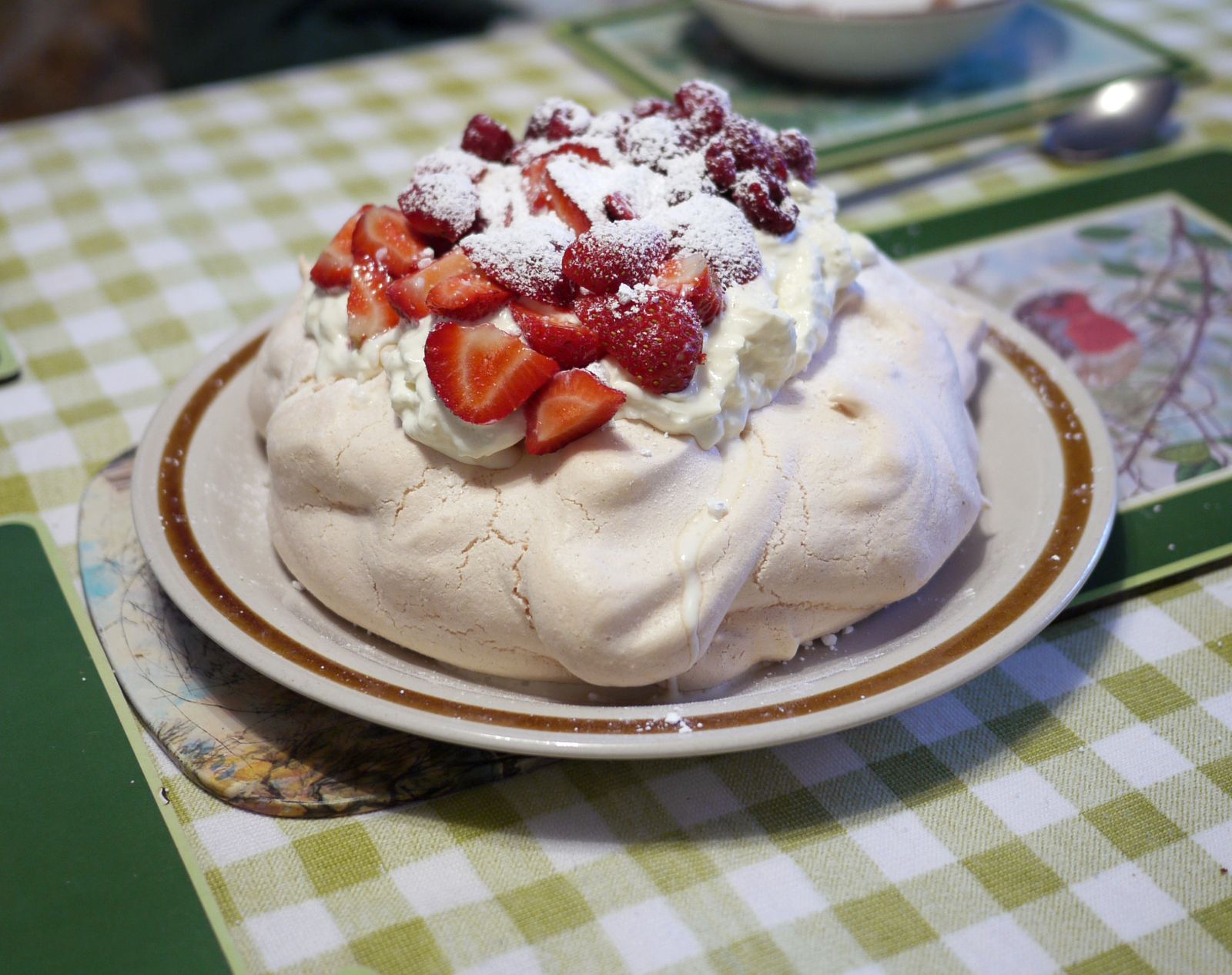
Pavlova with cream and berries: brett jordan, CC BY 2.0
A dessert for a dancer
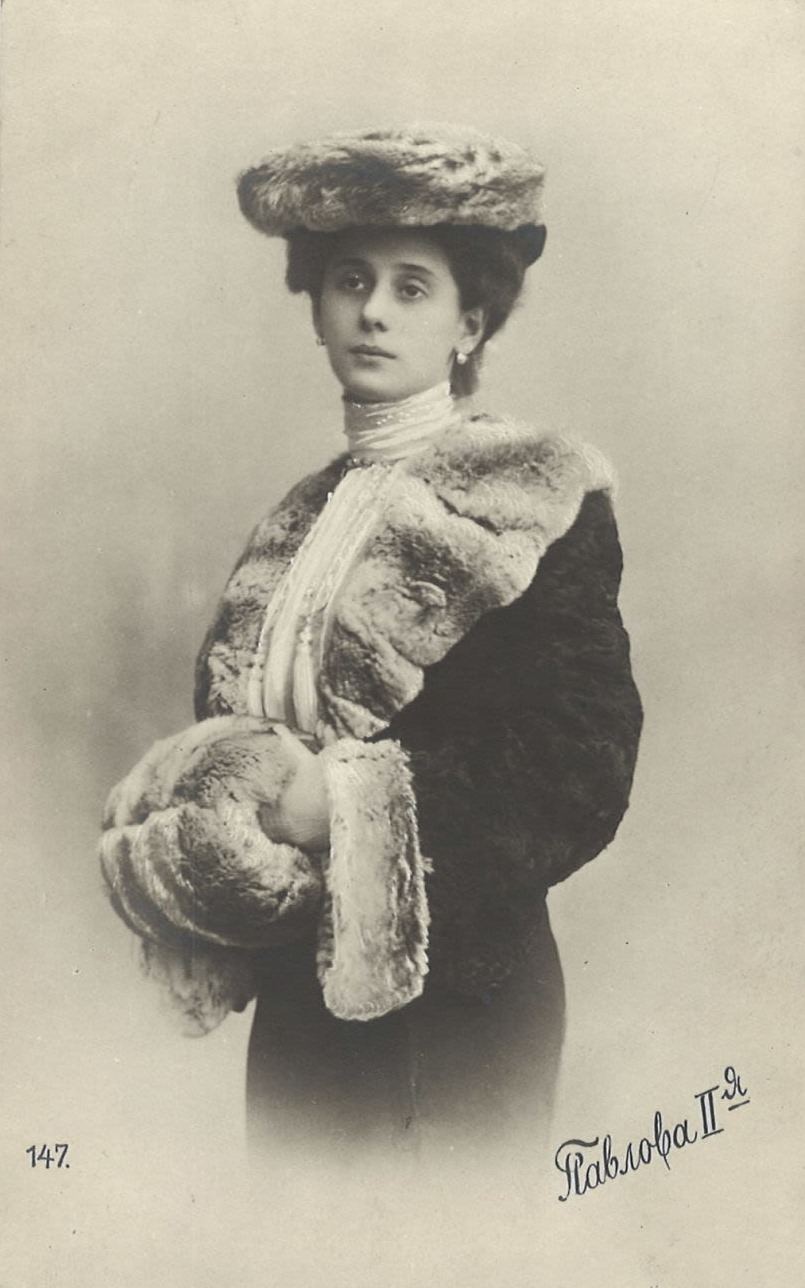
Anna Pavlova was one of the most famous ballerinas in the world in the early twentieth century, celebrated for her role as the Dying Swan. When she toured Australia and New Zealand in 1926, returning to Australia in 1929, she caused a sensation. Somewhere along the way, a light, white meringue cake was named in her honor, said to be as airy as her dancing, with the cream and fruit sometimes compared to a tutu.
Video: Classic Aussie Pavlova (RecipeTin Eats), embedded from YouTube.
This dessert is named after a ballerina and two countries claim it
Pavlova is named for ballerina Anna Pavlova's 1920s tour of Australia and New Zealand; both countries claim the dessert.
YouTube @IntercontinentalChef (launching soon). Photos in this Short: Pavlova dessert.JPG - Hazel Fowler (Public domain) via Wikimedia Commons | Pavlova Dessert with Fruit.jpg - Alice Batt (CC BY-SA 4.0) via Wikimedia Commons | Anna pavlova -c. 1905.jpg - Photography studio of the Imperial Mariinsky Theatre. St. Pe (Public domain) via Wikimedia Commons | Anna Pavlova, portrait.jpg - Scanning Dmitry Makeev, scan date - 2020 year. (Public domain) via Wikimedia Commons | Meringue cookies.jpg - Benjamin Ikuta (CC BY-SA 4.0) via Wikimedia Commons | Homemade meringues (
Who made it first?
Australians and New Zealanders have argued about the pavlova for decades. An Australian story credits Bert Sachse, a chef at a Perth hotel, with creating it in the 1930s. New Zealand points to its old cookbooks and magazines: food historian Helen Leach found pavlova recipes printed there from the late 1920s, including small coffee and walnut meringues called pavlova cakes in 1928 and a large meringue cake topped with cream and fruit in 1929, years before the Perth claim.
The plot thickens further. Later researchers found that baked meringue cakes topped with cream and fruit existed earlier in Europe and America, and that the name may have been attached to an older idea. The friendly rivalry continues regardless, and both countries happily eat it.
The science of the marshmallow middle
What makes a pavlova different from a plain meringue is its center. A spoonful of cornstarch and a dash of vinegar help the beaten egg whites stay moist and soft inside while the outside bakes into a thin, crisp shell. A low oven and slow cooling, with the door ajar, help prevent cracks, though a few cracks are part of its charm and get hidden under cream.
Superfine sugar dissolves faster than regular sugar, which helps avoid sticky beads of syrup weeping from the baked shell.
How to serve it
Pavlova is a summer dessert, and since Christmas falls in summer in the Southern Hemisphere, it is a star of holiday tables. Top it just before serving with softly whipped cream and fresh fruit: kiwifruit, strawberries and passionfruit pulp are classic. Assemble at the last minute, because the cream softens the shell quickly.
Mini pavlovas, sometimes called pavlova nests, are popular for parties, and some families make a pavlova roll, a meringue sheet rolled around cream and fruit. Store-bought pavlova bases are sold in supermarkets across both countries, a sign of how central the dessert is to everyday celebrations.
Make Pavlova at home
Ingredients
- 4 large egg whites, at room temperature
- 1 cup superfine (caster) sugar (200 g)
- 1 tsp cornstarch (cornflour)
- 1 tsp white vinegar
- 1/2 tsp vanilla extract
- 1 1/4 cups heavy cream (300 ml)
- 1 tbsp powdered sugar
- Fruit: 2 kiwifruit, 1 cup strawberries (about 150 g), pulp of 2 passionfruit
Method
- Heat the oven to 300 F (150 C). Draw an 8 inch (20 cm) circle on parchment and flip it onto a baking sheet.
- In a very clean bowl, beat the egg whites to soft peaks.
- With the mixer running, add the caster sugar one spoonful at a time. Keep beating 8 to 10 minutes until the meringue is thick and glossy and the sugar has dissolved (rub a little between your fingers: it should not feel gritty).
- Beat in the cornstarch, vinegar and vanilla.
- Spoon the meringue onto the circle, building up the sides slightly so the center has a shallow dip.
- Put it in the oven and immediately lower the heat to 250 F (120 C). Bake 1 hour 15 minutes, until the outside is dry and crisp.
- Turn off the oven, prop the door ajar and let the pavlova cool completely inside, at least 1 hour.
- Just before serving, whip the cream with the powdered sugar to soft peaks. Spread over the pavlova and top with sliced fruit and passionfruit pulp.
- Wikipedia: Pavlova
- The Spinoff: Pavlova was invented in Dunedin. Or maybe Germany
- Wikipedia: Helen Leach
Facts on this page were checked against these sources.
- Pavlova with cream and berries: brett jordan, CC BY 2.0
- Anna Pavlova, about 1905: Photography studio of the Imperial Mariinsky Theatre, St. Petersburg, Public domain
- Short photos: Pavlova dessert.JPG - Hazel Fowler (Public domain) via Wikimedia Commons | Pavlova Dessert with Fruit.jpg - Alice Batt (CC BY-SA 4.0) via Wikimedia Commons | Anna pavlova -c. 1905.jpg - Photography studio of the Imperial Mariinsky Theatre. St. Pe (Public domain) via Wikimedia Commons | Anna Pavlova, portrait.jpg - Scanning Dmitry Makeev, scan date - 2020 year. (Public domain) via Wikimedia Commons | Meringue cookies.jpg - Benjamin Ikuta (CC BY-SA 4.0) via Wikimedia Commons | Homemade meringues (16961016019).jpg - Ruth Hartnup from Vancouver, Canada (CC BY 2.0) via Wikimedia Commons | Woman holding a beautiful pavlova dessert topped with fresh berries in a bright kitchen setting.jpg - Shixart1985 (CC BY 2.0) via Wikimedia Commons | Mixed Berry Pavlova.jpg - Kimberly Vardeman (CC BY 2.0) via Wikimedia Commons
Text written by Intercontinental Chef.