Paella Valenciana
Valencia's rice, cooked over open fire. The original paella from Valencia uses chicken, rabbit, green beans and saffron, not seafood. Its farm roots, the socarrat crust and a recipe.
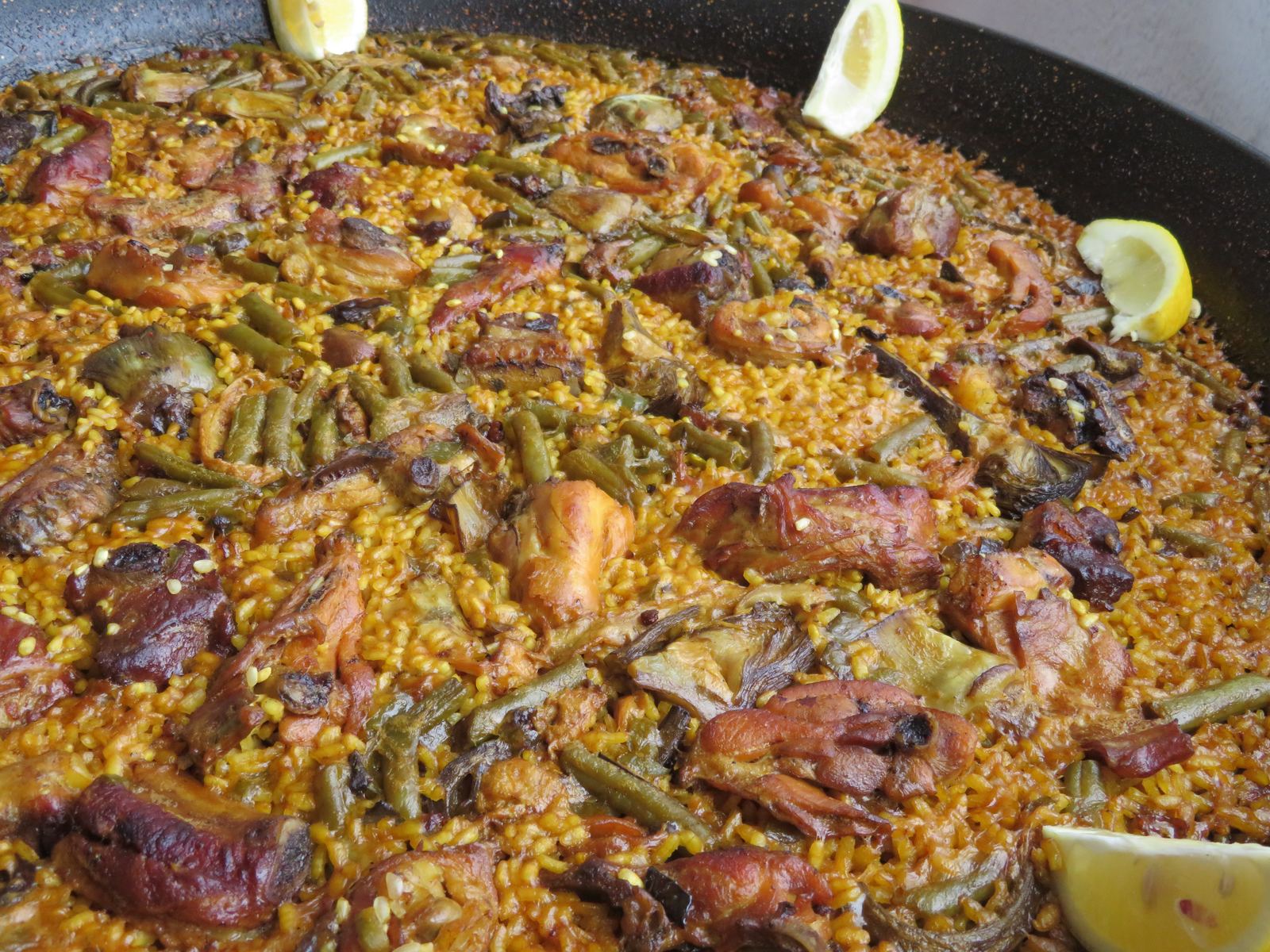
Paella valenciana: Juan Emilio Prades Bel, CC BY 4.0
A farmhand's lunch
Paella comes from the rice fields around the Albufera lagoon just south of Valencia, where rice has been grown since the Moorish era brought irrigation to the region. Farm workers cooked rice in a wide, shallow pan over a wood fire in the fields, adding whatever was at hand: rabbit, chicken, snails, beans. The word paella is Valencian for the pan itself, from the Latin patella.
Video: Paella Valenciana: The Secrets Behind Spain’s Most Famous Dish | Food Secrets Ep.1 | DW Food (DW Food), embedded from YouTube.
What goes in a real one
Valencians are serious about their paella. The traditional version uses ten core ingredients: chicken, rabbit, flat green beans, garrofó (a large, flat white bean), tomato, olive oil, saffron, rice, salt and water. Sweet paprika, garlic, snails or a sprig of rosemary are accepted local touches. Seafood paella is delicious, but in Valencia it is a different dish, and mixing meat and shellfish is often mocked as a tourist creation.
Rice choice matters. Short or medium grains such as bomba or senia absorb plenty of broth while staying distinct.
Valencia is so protective of the dish that local organizations have campaigned to define its traditional ingredients, and paella cooking contests are held across the region. In the town of Sueca, at the edge of the rice fields, an international paella competition has run every year since 1961. Outside Spain, the word paella is often used for any rice dish cooked in the wide pan, and mixed versions with chorizo would raise eyebrows in a Valencian home. Arroz a banda and arroz negro, made with squid ink, are other beloved rice dishes of the coast.
The art of not stirring
Unlike risotto, paella is not stirred once the rice is in. The rice is spread in a thin, even layer and left to absorb the broth. In the last minutes the heat is turned up so the bottom toasts into socarrat, a crisp, caramelized crust that crackles when you scrape it. Many cooks listen for the crackle and smell for a toasty, not burnt, note.
How to serve it
Paella is a weekend and holiday meal, often cooked outdoors over orange wood for a crowd, and traditionally eaten at lunch rather than dinner. The pan goes straight to the table. In some homes, everyone eats directly from the pan with a spoon, each person working from their own wedge toward the center.
Make Paella Valenciana at home
Ingredients
- 1/3 cup olive oil (80 ml)
- 1 1/2 lb (700 g) chicken thighs and drumsticks, cut into smaller pieces
- 1 lb (450 g) rabbit pieces (or more chicken)
- 8 oz (225 g) flat green beans, trimmed and cut in 2 inch (5 cm) pieces
- 1 cup cooked large white beans or butter beans (about 170 g)
- 1 ripe tomato, grated, skin discarded
- 1 tsp sweet smoked or unsmoked paprika
- 1 large pinch saffron
- 7 cups water or light chicken stock (1.65 liters), hot
- 2 cups bomba or other short-grain paella rice (400 g)
- 1 sprig rosemary (optional)
- Salt
Method
- Heat the oil in a 15 to 16 inch (38 to 40 cm) paella pan over medium-high heat. Season the meat with salt and brown it slowly on all sides, about 15 minutes, pushing pieces to the edges as they brown.
- Add the green beans and cook 3 minutes. Make a space in the center, add the tomato and cook until it darkens, then stir in the paprika for a few seconds.
- Pour in the hot water or stock, add the saffron and the white beans, and simmer 20 minutes to make a flavorful broth. Taste: it should be slightly salty.
- Scatter the rice evenly across the pan and gently shake it level. From now on, do not stir.
- Cook on high heat for 10 minutes, then medium-low for 8 to 10 minutes until the liquid is absorbed and the rice is just tender. Lay the rosemary on top near the end.
- Raise the heat for 1 to 2 minutes, listening for a crackle, to form the socarrat.
- Remove from heat, cover with a clean towel and rest 5 minutes before serving.
- Visit Valencia: Traditional Valencian Paella Recipe
- Concurs de Paella de Sueca: History
- Wikipedia: Paella
Facts on this page were checked against these sources.
- Paella valenciana: Juan Emilio Prades Bel, CC BY 4.0
Text written by Intercontinental Chef.